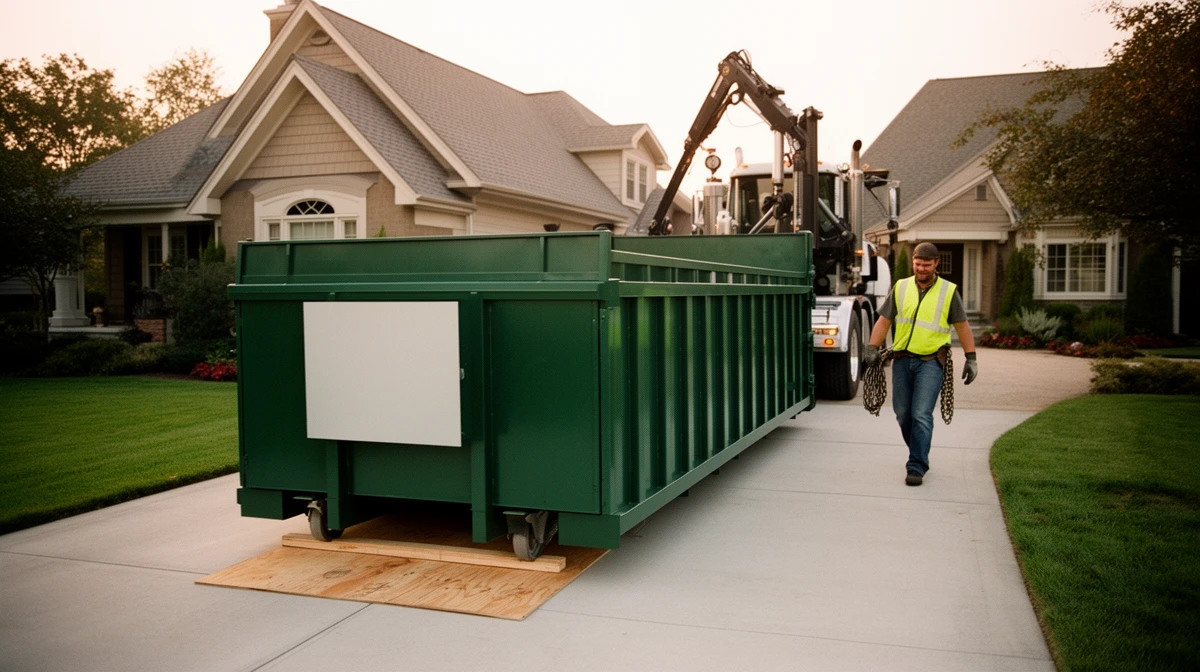
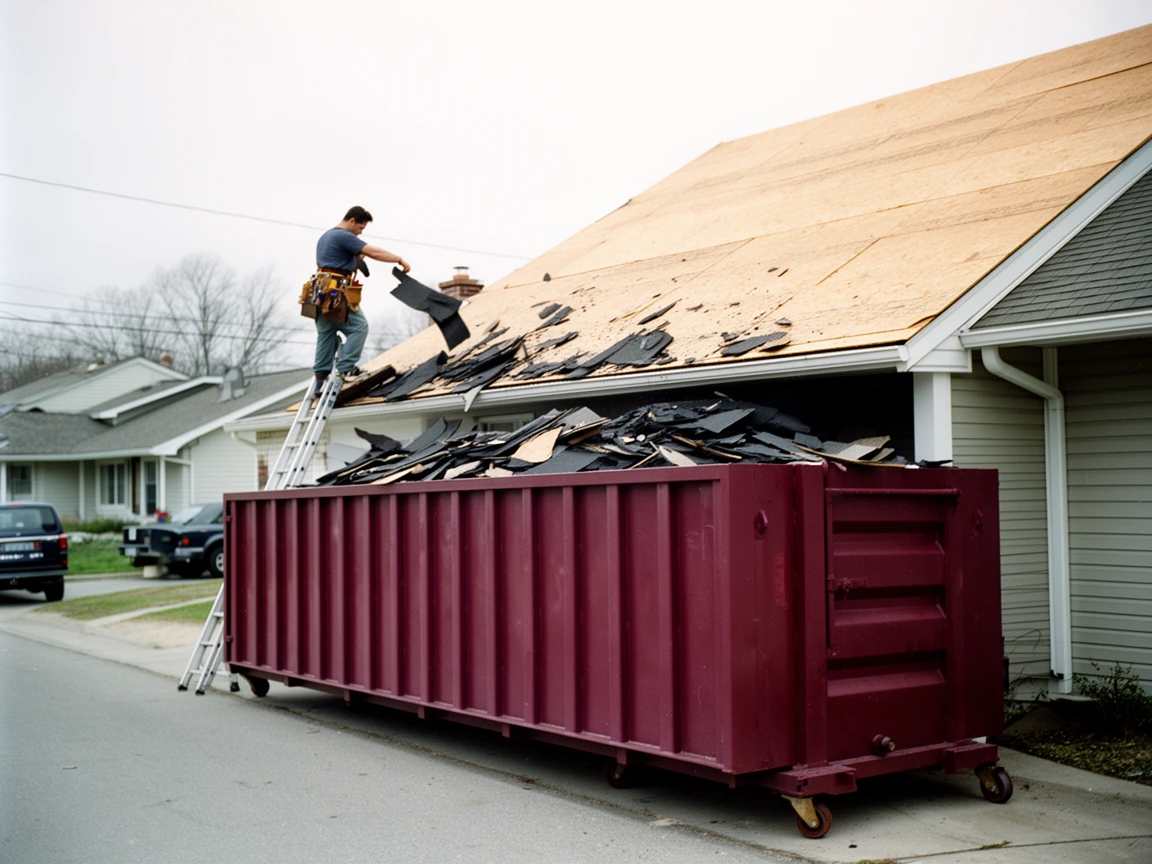
Don't treat Roofing Dumpster Rental like ordinary trash hauling. It is stripped shingles, which are dense enough that roofing containers are deliberately small, and that changes what the hauler needs from you. The part of this job people find out too late is that nobody knows how many layers are up there until the crew opens the roof, and each one adds tonnage.
Yardage tells you how much room the container has. It tells you nothing about how much of that room you're actually allowed to fill with something heavy. Roofers and homeowners typically place this order, and because the debris type is already known before pickup, the container settles into the 10 or 15 yard range without much back-and-forth. Two things shorten this call: how many days you'll need the container, and whether anything in the load is restricted.
Dirt, concrete, brick and tile carry weight that outruns their bulk, so the container built for this job is shallow and stops loading long before it looks full. Confirm the rental period starts at delivery, not at first use, since a container that sits empty for two days still counts against the clock. The dumpster you actually need is the one sized to the heaviest material in the load, not the one that looks roomy enough for everything else.