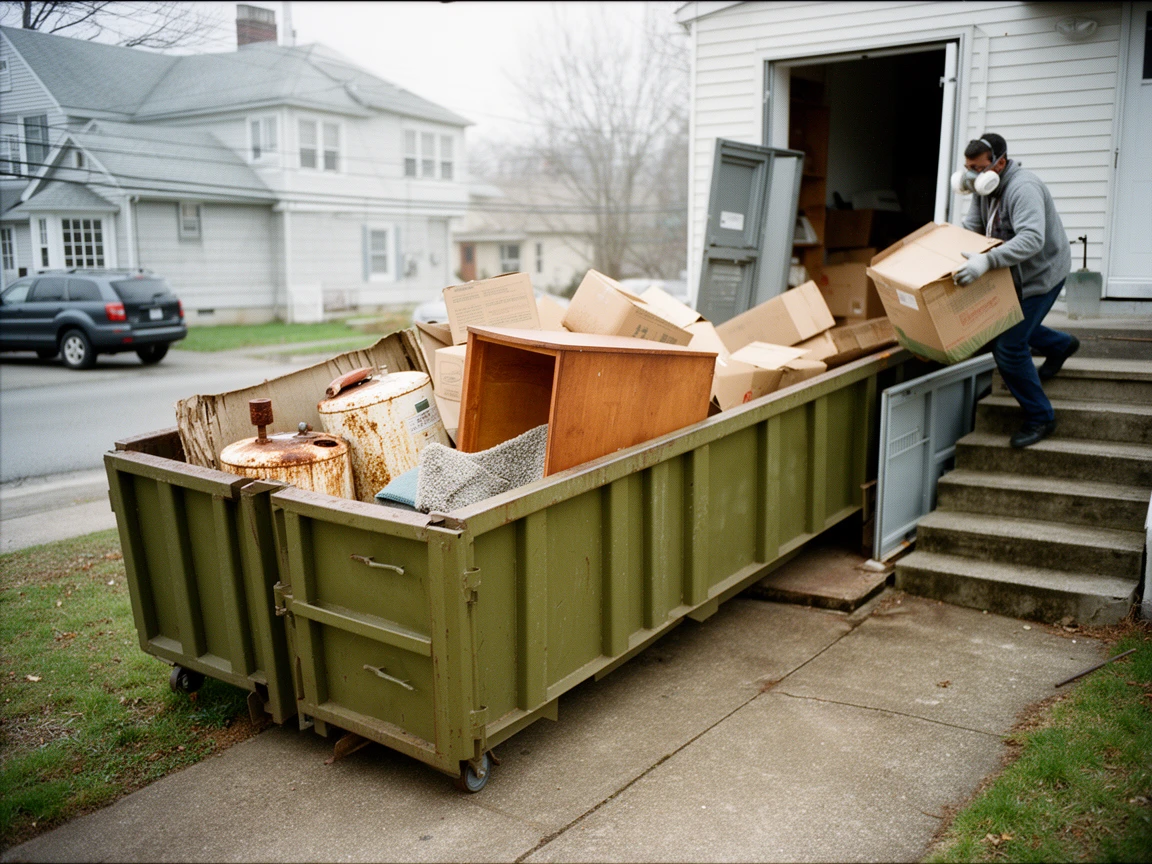
Don't treat Basement Cleanout like ordinary trash hauling. It is below-grade storage where anything that ever got wet still weighs several times its dry weight, and that changes what the hauler needs from you. You'll want this settled before the truck shows up: water history turns a volume job into a weight job without changing how the pile looks.
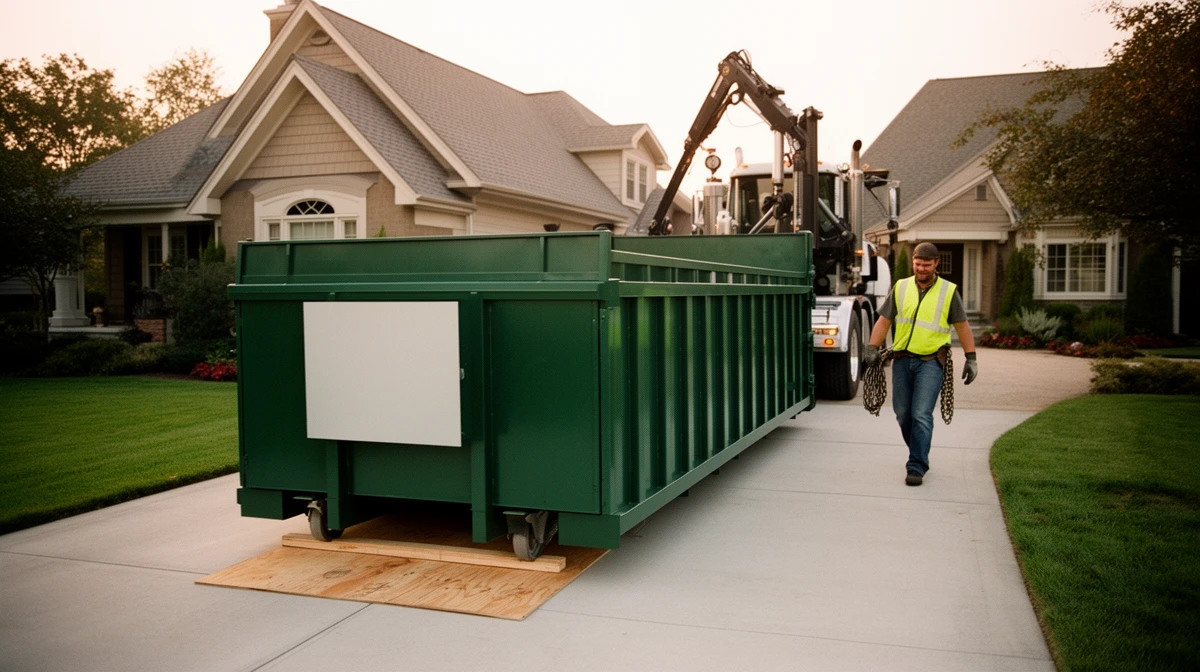
Don't assume an empty-looking container means room to spare. If what's inside is dense, the ton limit can already be spent. This request comes from homeowners more than any other caller, and the volume they generate is the reason 15 or 20 yard containers are the ones kept in ready supply for it. Skip the back-and-forth by knowing two things up front: clearance for delivery, and whether the container will sit on the street or the driveway.
Nobody knows the full debris count until the work is underway, so it's worth asking what a swap or a second pickup costs before committing to one size. Get the swap-out cost in writing if the project runs past the rental window -- a second container costs less mid-job than a rush order arranged after the fact. A container that's half-empty and a container that's overflowing are the same failure: the wrong size was ordered. Give the real numbers and avoid either one.